The global market size of universal converters is projected to reach approximately 12.86 billion US dollars in 2026, representing an 11.6% growth from 11.52 billion US dollars in 2025, indicating a steady expansion trend. The Asia-Pacific region, as the largest consumer market, accounts for 38.5% of the global market share, followed by Europe (28.7%) and North America (22.3%). China, the world's primary production base, supplies about 72.4% of global universal converter products. In 2026, global shipments of universal converters are expected to hit 385 million units, a year-on-year increase of 12.4%, with an average unit price of around 3.34 US dollars.
Key drivers of market demand growth include the continuous rise in international travel, rapid development of cross-border e-commerce transactions, the inherent differences in power supply standards across countries, and the enhanced purchasing power of emerging markets. It is estimated that international tourist arrivals will reach 1.42 billion in 2026, up 6.8% from 2025, while global cross-border e-commerce transactions will hit 4.87 trillion US dollars.
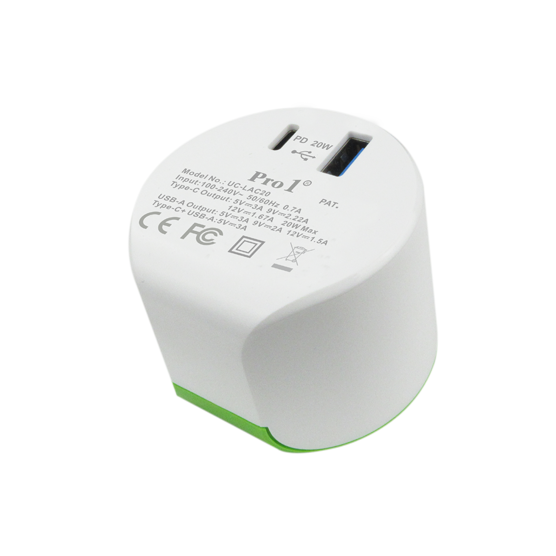
In terms of product structure, multi-functional converters hold a 65.2% market share, standard converters 23.8%, and intelligent converters 11.0%. Notably, the intelligent converter segment is poised for robust growth, with an anticipated growth rate of 18.3% in 2026, significantly outpacing the average growth rate of traditional products. Converters with USB-C output are expected to see their market share rise from 32.1% in 2025 to 41.7% in 2026. Online sales channels will continue to expand, accounting for 62.3% of the market in 2026, and products with international safety certifications will occupy 85.4% of the market share.
China's universal converter market exhibits distinct regional concentration in supply and demand. East China, the country's largest production base, contributes 42.7% of national output. In 2026, China's total production of universal converters is projected to reach 215 million units, an 8.6% increase from 198 million units in 2025, with a capacity utilization rate of 76.4%. There are approximately 280 manufacturers of universal converters in China, among which 47 are large-scale enterprises with annual output value exceeding 50 million yuan, accounting for 16.8% of the total and contributing 68.9% of national production. Four major industrial clusters in Shenzhen, Dongguan, Ningbo, and Wenzhou have formed a complete industrial chain support system.
Leading brands such as Bull Group, Xiaomi, and Ugreen hold 45.8% of the domestic market share, with Bull Group at 18.4%, Ugreen Technology at 12.7%, and Xiaomi's ecosystem enterprises at 8.9%. China's domestic demand for universal converters is expected to reach 82 million units in 2026, a year-on-year increase of 11.2%, accounting for 38.1% of total production, while exports account for 61.9%. The domestic consumer market is mainly concentrated in first-tier cities such as Beijing, Shanghai, Guangzhou, and Shenzhen, as well as new first-tier cities like Hangzhou, Nanjing, and Chengdu, which collectively account for 56.8% of national domestic demand.
Regarding consumer demographics, business professionals aged 25-40 account for 31.4%, outbound travel enthusiasts 28.3%, overseas students and workers 19.7%, and digital product enthusiasts 14.2%. The technological iteration and innovation trends of products are characterized by diversified development, with technological progress driving the transformation from single-function to intelligent and integrated products. The application of new flame-retardant materials is a key direction of technological iteration, with the flame-retardant grade upgraded from V-0 to 5V-0.
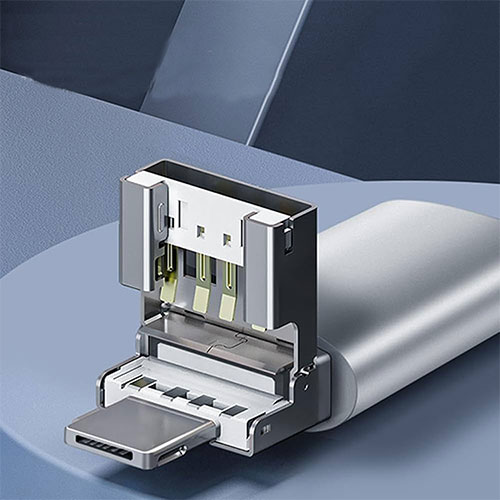
The mature application of intelligent identification technology marks a significant technological breakthrough. Equipped with built-in intelligent chips, products can automatically identify the power requirements and voltage standards of connected devices to achieve optimal matching output. Currently, products with intelligent identification functions account for 23.4% of the market. The integration of fast charging technology is another important direction of technological upgrading, with a growing number of products supporting mainstream fast charging protocols such as PD3.0, QC4.0, and SCP. In 2026, fast-charging converters will account for 38.7% of the market, with an average charging speed 42.6% faster than traditional products.
Increasing consumer demand for portability is driving the upgrading of products towards lightweight and miniaturized designs. In 2026, the market share of foldable universal converters will rise from 18.2% in 2025 to 28.7%, and lightweight products weighing 30-60 grams will account for 45.8% of the market. Intelligent functions have become the core driver of consumer demand upgrading, with intelligent universal converters holding a 31.8% market share in 2026, a significant increase from 22.4% in 2025.
Safety functions have become the primary consideration for consumers when choosing products, accounting for 87.4%, surpassing factors such as price and functionality. In 2026, products with more than five layers of safety protection will account for 68.7% of the market, and the safety accident rate will drop from 0.023% in 2025 to 0.008% in 2026, a decrease of 65.2%.
A forecasting model based on in-depth market research data and industry trend analysis shows that the total capacity of China's universal converter market will reach 215 million units in 2026, a year-on-year increase of 12.8%, with a market size of 15.87 billion yuan, a year-on-year increase of 15.3%. Among them, intelligent products will account for 31.8%, portable products 45.8%, and safe products 68.7%, indicating continuous optimization and upgrading of product structure. Market concentration will further increase, with the top 10 brands holding 67.8% of the market share.
Technological innovation is the dominant driving factor, with a technological innovation index of 8.7 and a contribution rate of 28.4% to market growth, making it the most important growth driver. Upgrading of consumption structure follows closely, with the market share of high-end products expected to reach 38.7% in 2026, an increase of 6.2 percentage points from 2025. The overall market maintains a healthy and stable development trend, laying a solid foundation for sustained growth in the next five years.

 Network Supported